Most people think of Las Vegas as a place to lose money or watch magic tricks. But for Alli Starr, the city is something else entirely: a high-stakes classroom where the syllabus is written in real-time by audiences who pay top dollar to be entertained. If you’re wondering how a modern artist navigates the brutal, beautiful machinery of the Strip without burning out, you have to look at how she treats every gig not just as a performance, but as a data point in her ongoing education.
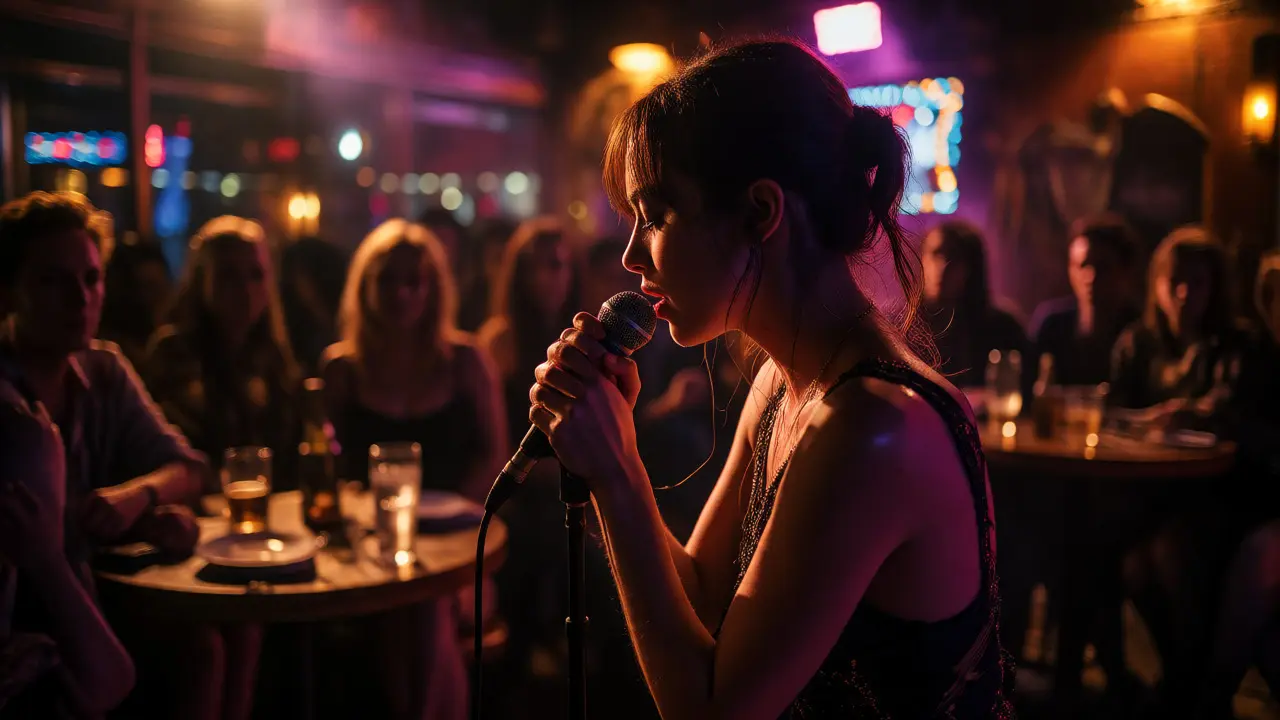
This isn’t about the glitz we see on Instagram. It’s about the grit required to hold a room when the air conditioning fails, or when the crowd has had too many free drinks and zero attention spans. Vegas doesn’t care about your backstory. It cares if you can deliver. For artists like Alli Starr, the "Vegas University" curriculum is self-directed, expensive, and incredibly effective.
The Myth of the Overnight Success
We love a good origin story. The garage band that made it big, the viral TikTok moment. But the path through Las Vegas is rarely linear. It’s messy. It involves playing to half-empty rooms on Tuesday nights before headlining on Saturday. This contrast is what sharpens an artist. You learn quickly that hype doesn’t sustain a career; consistency does.
Alli Starr’s approach reflects a shift in how young performers view their early careers. Instead of chasing record deals from a distance, they are embedding themselves in ecosystems where feedback is immediate and financial stakes are high. In Vegas, if you don’t connect, the lights go down. There’s no hiding behind autotune or a pre-recorded track when the sound system is calibrated to reveal every flaw. This transparency forces rapid skill acquisition. You fix your pitch, you tighten your setlist, and you engage the front row because they are literally inches away from judging your soul.
Reading the Room: A Masterclass in Audience Psychology
One of the hardest skills to teach in any music school is audience reading. Textbooks can explain demographics, but they can’t explain why a specific song works at 10 PM but bombs at midnight. Vegas provides the lab conditions for this experiment. Different venues attract different crowds. A lounge in downtown Fremont Street operates on a completely different frequency than a club on the Strip.
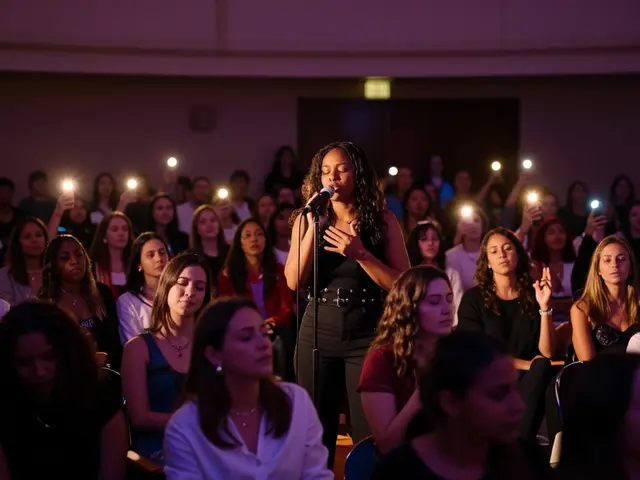
Artists learn to pivot mid-set. Maybe the energy dips after a slow ballad. Do you push another slow song, or do you switch to a high-tempo track? In a controlled studio environment, you might not know until you release the album. In Vegas, you know within thirty seconds. This real-time feedback loop builds an intuitive understanding of pacing that takes years to develop elsewhere. It’s practical psychology applied to performance art.
- Venue Vibe: Understanding the difference between a listening room and a party venue.
- Time Slots: Learning how crowd energy shifts from happy hour to late-night chaos.
- Engagement Tactics: Testing call-and-response versus visual spectacle.

The Business Behind the Bling
Let’s cut through the noise: performing in Vegas is expensive. Not just in terms of travel and lodging, but in opportunity cost. While peers are touring nationally, a Vegas-based artist might be locked into a residency schedule. So why do it? Because the infrastructure here supports a level of production quality that is hard to replicate on the road.
You get access to world-class sound engineers, lighting designers, and stage managers who have seen it all. Working with these professionals elevates your own standards. You learn what a proper monitor mix sounds like. You understand the importance of stage cues. These technical skills transfer directly to larger tours later in your career. It’s an apprenticeship model, disguised as nightlife.
Furthermore, the networking density in Vegas is unmatched. You run into producers, label scouts, and other artists constantly. But unlike Los Angeles, where everyone is pretending to be busy, Vegas interactions often happen in work environments. You bond over shared struggles-bad sound checks, difficult promoters, long hours. These connections tend to be more authentic because they are forged in the trenches.
Resilience Training: Handling the Vegas Grind
Burnout is the silent killer in the entertainment industry. Vegas amplifies this risk. The city never sleeps, and neither do its workers. For an artist, maintaining vocal health and mental clarity while surrounded by constant stimulation requires discipline. Alli Starr’s journey highlights the importance of boundaries. Saying no to the after-party invites isn’t just about saving money; it’s about preserving the instrument.
This aspect of the "education" is less glamorous but crucial. It teaches time management, physical maintenance, and emotional regulation. How do you stay focused when the person next to you is winning ten grand on slots? How do you keep your voice fresh for the third show in two days? These questions don’t have easy answers, but living in the solution daily makes you better equipped to handle them anywhere else in the world.
| Factor | Traditional Touring | Las Vegas Residency |
|---|---|---|
| Feedback Loop | Slow (weeks/months) | Immediate (nightly) |
| Production Quality | Variable based on budget | Consistently High |
| Audience Type | Fans seeking connection | Tourists seeking experience |
| Skill Development | Endurance & Logistics | Pacing & Adaptability |
| Cost Structure | High Travel Expenses | High Venue Fees |
From Local Hero to Global Brand
The ultimate goal of this hands-on education isn’t to stay in Vegas forever. It’s to use the city as a launchpad. When you can command a room full of strangers who didn’t buy tickets specifically for you, you’ve proven market viability. That proof is valuable. It translates into leverage when negotiating contracts, booking festivals, or launching new projects.
Artists who master the Vegas circuit often find their national appeal grows faster. Why? Because they’ve been stress-tested. They know how to handle pressure. They know how to entertain skeptics. When they step onto a festival stage in Chicago or London, the crowd feels that confidence. It’s not arrogance; it’s competence earned through repetition and refinement.
Alli Starr represents this new wave of performers who treat location as a tool rather than a trap. She uses the resources available in Vegas to refine her craft, then exports that polished product to the wider world. It’s a smart play in an industry that rewards visibility and reliability.
Practical Takeaways for Aspiring Performers
If you’re thinking about taking a page from the Vegas playbook, here’s what you need to focus on. First, prioritize live performance opportunities over studio perfection. Get on stage, even if it’s small. Second, study your audience. Keep notes after every show. What worked? What didn’t? Third, build relationships with the crew, not just the talent. Sound engineers and lighting techs remember who is easy to work with. Fourth, protect your health. Rest is part of the job.
You don’t need to move to Nevada to benefit from this mindset. Apply the same rigor to your local scene. Treat every gig as a test. Learn from every failure. Over time, you’ll build the kind of resilience and skill set that makes you undeniable, regardless of your zip code.
Why is Las Vegas considered a unique training ground for musicians?
Las Vegas offers a high-pressure environment with immediate audience feedback, world-class production facilities, and a diverse tourist demographic that tests an artist's ability to adapt and engage non-fan audiences.
How does Alli Starr’s approach differ from traditional touring artists?
Unlike traditional touring artists who rely on existing fan bases, Alli Starr leverages the transient nature of Vegas crowds to refine her performance style, focusing on broad appeal and high-energy engagement rather than niche loyalty.
What are the main challenges of performing in Las Vegas?
Key challenges include high operational costs, intense competition for venue slots, maintaining vocal and mental health amidst a chaotic lifestyle, and standing out in a saturated entertainment market.
Can independent artists succeed in the Las Vegas scene?
Yes, independent artists can succeed by building strong local networks, delivering consistent high-quality performances, and leveraging social media to convert casual Vegas viewers into dedicated fans.
How does residency impact an artist's career growth?
A residency allows artists to perfect their craft in a stable environment, build a reputation with industry insiders, and create a reliable income stream that can fund broader touring efforts.